Photo of The Day

Short stories about traveling to interesting places

23/04/10

Day 3 - SIGIRIYA/POLONNARUWA – MATALE - KANDY


Yesterday was an intense day, full of emotions, of information and new things. We are now emerged in the culture and in country. Once more we had an early B/F with a magnificent view of the lake wile the morning breeze still arise. This place is incredible quit even with guest. We had for company the curious birds and kind employees chinning the pool and the garden.
We start our journey in one of Jude’s “short cuts”. The road turns out to be incredible. A small country road in the middle of the villages with a lot of action. Since it was early in the morning we joint the small children going to school in nice white uniforms. We also saw the elephant refuges in the top of the trees because this area is an elephant runway. We did not have the chance to see one.
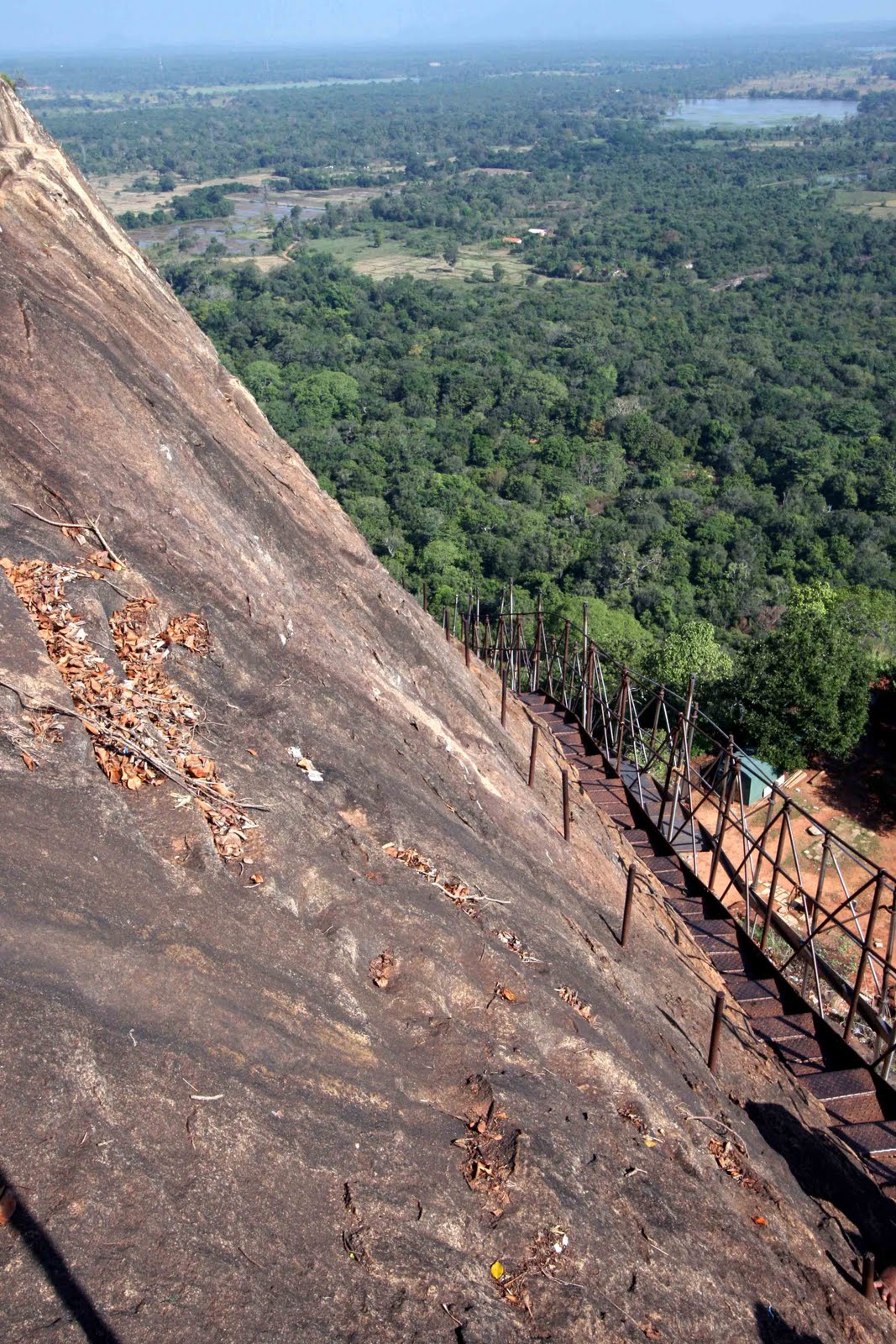
Arriving to Sigiriya rock fortress [5th Century AD] is truly an emotion. Sri Lankan architectural tradition is well displayed at Sigiriya, the best preserved city centre in Asia from the first millennium, with its combination of buildings and gardens with their trees, pathways, water gardens, the fusion of symmetrical and asymmetrical elements, use of varying levels and of axial and radial planning. After the first stage we see the famous Sigiriya Frescoes. The paintings would have covered most of the western face of the rock, covering an area 140 meters long and 40 meters high. There are references in the Graffiti to 500 ladies in these paintings. They would have been a breath-taking sight, when seen from the. After the Mirror Wall we get to the most significant feature of the Rock would have been the Lion staircase leading to the palace garden on the summit. Based on the ideas described in some of the graffiti, this Lion staircase could be visualized as a gigantic figure towering majestically against the granite cliff, facing north, bright colored, and awe-inspiring. Through the open mouth of the Lion had led the covered staircase built of bricks and timber and a tiled roof. All that remains now are the two colossal paws and a mass of brick masonry that surround the ancient limestone steps and the cuts and groves on the rock face give an idea of the size and shape of the lion figure. We finally get to the top. The view is breathtaking and the power of his place is enormous. The all complex consists of the central rock, rising 200 meters above the surrounding plain, and the two rectangular precincts on the east (90 hectares) and the west (40 hectares), surrounded by two moats and three ramparts. This city shows an advanced irrigation system to support agriculture. These people pursued matters aesthetic such as dancing, music, painting, sculpting and literature in spare time. This led to the development of quaint traditional customs that are so peculiar to Sri Lanka. The concept of "Wewai Dagobai" (Wewai = Reservoir, Dagobai = A Buddhist shrine) arose from the above, establishing the links between Buddhism, culture and irrigation. This place is simply magical. The sensation is overwhelming.
We proceed to Polonnaruwa; the 2nd ancient capital of Sri Lanka [10th Century AD]. Just north of present-day Polonnaruwa town, 140km (90 miles) north of Kandy, are the ruins of ancient Polonnaruwa, which date from the late 10th century, when the Chola kings of southern India invaded Sri Lanka and conquered Anuradhapura. The invaders moved their capital to Polonnaruwa, strategically located for defense against attacks from the unconquered Sinhala kingdom of Ruhuna, in the southeast (which has lent its name to Sri Lanka's most visited national park). Their defenses ultimately proved inadequate and in 1070 the Sinhalese ruler Vijayabahu forcibly evicted them from Polonnaruwa. Recognizing, however, that Anuradhapura's location made it vulnerable to any assault from southern India, he and his successors made their capital at Polonnaruwa, adding enormous temples, palaces, parks, gardens and huge tanks. By the 13th century AD, however, new waves of attacks from southern India forced the Sinhalese kings to abandon the north of the island, and the kingdoms of Kotte in the southwest (near modern Colombo), and Kandy, in the highlands, became the centers of Sinhalese power. The complex known as the Quadrangle impressed me. It stands within its own rectangle of walls, guarding the richest collection of ancient buildings in any of Sri Lanka's ruined capitals. In the southeast corner of the Quadrangle stands the Vatadage (reliquary), a circular building some 18m (59ft) in diameter, with four entrances leading to a central dagoba (shrine) which houses four seated Buddha images. There are beautiful bindings in Polonnaruwa (a few, very classical images of Sri Lanka, like the Royal Palace or the Lankatilaka Gedige). I also liked Gal Vihara, also known as the Cave of the Spirits of Knowledge; this is one of the most important Buddhist shrines. It takes the form of three colossal Buddha images carved out of a granite cliff. Most prominent is the standing image, 7m (23ft) tall, which was at one time thought to represent Ananda, the Buddha's first disciple, but is now regarded as being a Buddha image like the others. Next to it is an enormous 14m (46ft) reclining Buddha. Two smaller, less skillfully carved Buddha images occupy niches in the rock nearby. We leaved to Kandy passing true a spice garden.
The distance was long, and we arrived at dark. However we had time just to go to Temple of the Tooth Relic of Buddha, and assist to the opening of the relic. The day was over and we check in at the beautiful Amaya Hills hotel for a nice dinner and a perfect sri lankan Lion Beer. Cheers.

20/04/10

Day 2 – DAMBULLA – AUKANA- MIHINTALE – ANURADHAPURA


Amaya Lake hotel is much nicer at daylight. The big open view from the restaurant over the lake is astonish and serene. A stay at Amaya Lake lets you discover Sri Lanka's unique heritage once it is ideal jump-off point to witness the ancient wonders of the historic Cultural Triangle, this four-star resort is located along the shores of Kandalama Lake, surrounded by lush nature, and filled with inviting treats that we had no time to try. We leave the hotel after early breakfast to visit in first place Dambulla. Dambula is a part of the Cultural Triangle declared by UNESCO is on the main road from Sigiriya to Kandy about 19Km from Sigiriya. There are over 80 caves in the surrounding and some of them have been used by the monks as meditation locations. Major attractions are spread over 5 caves, which contain the statues and the paintings. As a sign of respect we took our shoes at the entrance, something that we will repeat so many times over the next days. Since it's founding in the 1 century BC by King Valagamba, many improvements and additions have been carried out to the sculptures and paintings over the years. Hindu statues are believed to be of the 12 century AD and the latest paintings are of the late 18-century. The temple is a perfect location to view evolution of the ancient Sri Lankan arts. Worthy of a detour is the Aukana Buddha 50km (30miles) south of Mihintale. This isolated colossus is the most perfectly preserved ancient statue in Sri lanka, though it is often wrongly dated. For many years it was attributed to the reign of the 5th century King Dhatusena, but the style of carving points to a later date. Whatever the date, it is a magnificent image, carved out of the living rock with supreme assurance. Although it stands erect, firmly planted on both feet, the body is graceful. This effect is helped by the beautifully flowing drapery which appears almost diaphanous. The Buddha's heavy right hand is raised in the posture of blessing; his other hand delicately touches his shoulder, as if holding his pleated robes in place. His expression is serene, and from his curled hair there sprouts the flame signifying super-enlightenment. It is only when you lower your gaze to the massive feet resting on the vastness of this statue. It rises to 13 meters (42ft) canopied by a reconstruction of the brick image house said to have contained it when it was first built. We proceed to Mihintale [3rd Century BC], situated 12 kilometers east of the ruins of the great city of Anuradhapura. The hilltop site is worth the climb, even in 95 degrees. The triple hills you struggle up give you superb views, one hilltop has a modern Buddha which is beautifully carved, another has an impressive dagoba and temple and the other is a climb up stone cut grooves to a meditation rock outcrop. We finish the day visiting Anuradhapura; the 1st ancient capital of Sri Lanka [6th Century AD]. The sacred city of Anuradhapura, now in picturesque ruins, was once a major center of Sri Lankan civilization. The fascinating ancient ruins include huge bell-shaped stupas built of small sun-dried bricks, temples, sculptures, palaces, and ancient drinking-water reservoirs. The city also had some of the most complex irrigation systems of the ancient world. Most of the great reservoir tanks still survive today, and some many be the oldest surviving reservoirs in the world. Today, the splendid sacred city of Anuradhapura, with its palaces, monasteries and monuments, draws many Buddhist pilgrims and visitors. The Sri Maha bodhiya is perhaps the oldest living tree in the world. Around 245 BC, Sanghamitta Theri brought with her a branch of the Bodhi Tree under which the Buddha attained enlightment. The tree was planted on a high terrace about 21 feet (6.5 m) above the ground and surrounded by railings. Today, the tree is one of the most sacred relics in Sri Lanka, respected by Buddhists all over the world. A wall was built around the tree during the reign of King Kirthi Sri Rajasingha, to protect it from wild elephants. We went just in full moon day that allows us to see all the movement in the temple with peregrines and devotes practicing their prayers, where the white dress compulsory to go to the temple match in perfectly harmony with the colorful Buddhist flags.

17/04/10

Day 1- Ayubowan - (You May Live Long) - Arriving to Colombo


After a long journey we finally arrived to Colombo anxious to start our adventure. I recognize Jude at Arrival Lounge at Colombo Airport soon has I saw him, after all Facebook messages. I had the strange impression that I knew this person for ages. He was kind enough to welcome us with some flower and with the magic word “Ayubowan” (You May Live Long). Has soon has we leave de AC of Colombo Airport I felt that the Asian humidity was already involving my body and my senses and I start sweating, maybe of joy too. For a small island, Sri Lanka has acquired a lot of names - Serendib, Trapobana, Ceylon, Teardrop of India, Resplendent Isle, Island of Dharma, Pearl of the Orient - an accumulation which reveals its richness and beauty, and the intensity of affection which it has evoked in visitors. For centuries it seduced travelers, who returned home with enchanting images of a languorous tropical isle of such deep spirituality and serenity that it entered the Western imagination as a Tahiti of the East. This, sadly, is the same island which, for the past 15 years, has been traumatized by a ferocious ethnic and religious conflict that has punctured the most willful exoticism and burned Sri Lanka into Western minds as the Northern Ireland of the Indian Ocean. However, the truth is that this conflict was mainly confined to the North and East of the island, and has not affected tourism in the rest of the island and is presently over. We were ready to discover everything. From the airport we proceed directly to Negombo to see fisheries activities. Negombo is a beautiful and genuine beach on the western coast of Sri Lanka, just a short drive north of Colombo. As it is also very close to the airport, Negombo was a convenient place to begin our trip to Sri Lanka. It is also very popular for the fish caught and the fish market. Daily tons of fresh and dry fish is sold here. We saw the Negombo’s fishermen preparing the fish and we stopped for a shot at incredible sunsets light. Among fish skins, stomachs and leavers, I had the chance to bring with me this young and truthful smile. We continued north to sleep at the remarkable Amaya Lake.

25/03/10

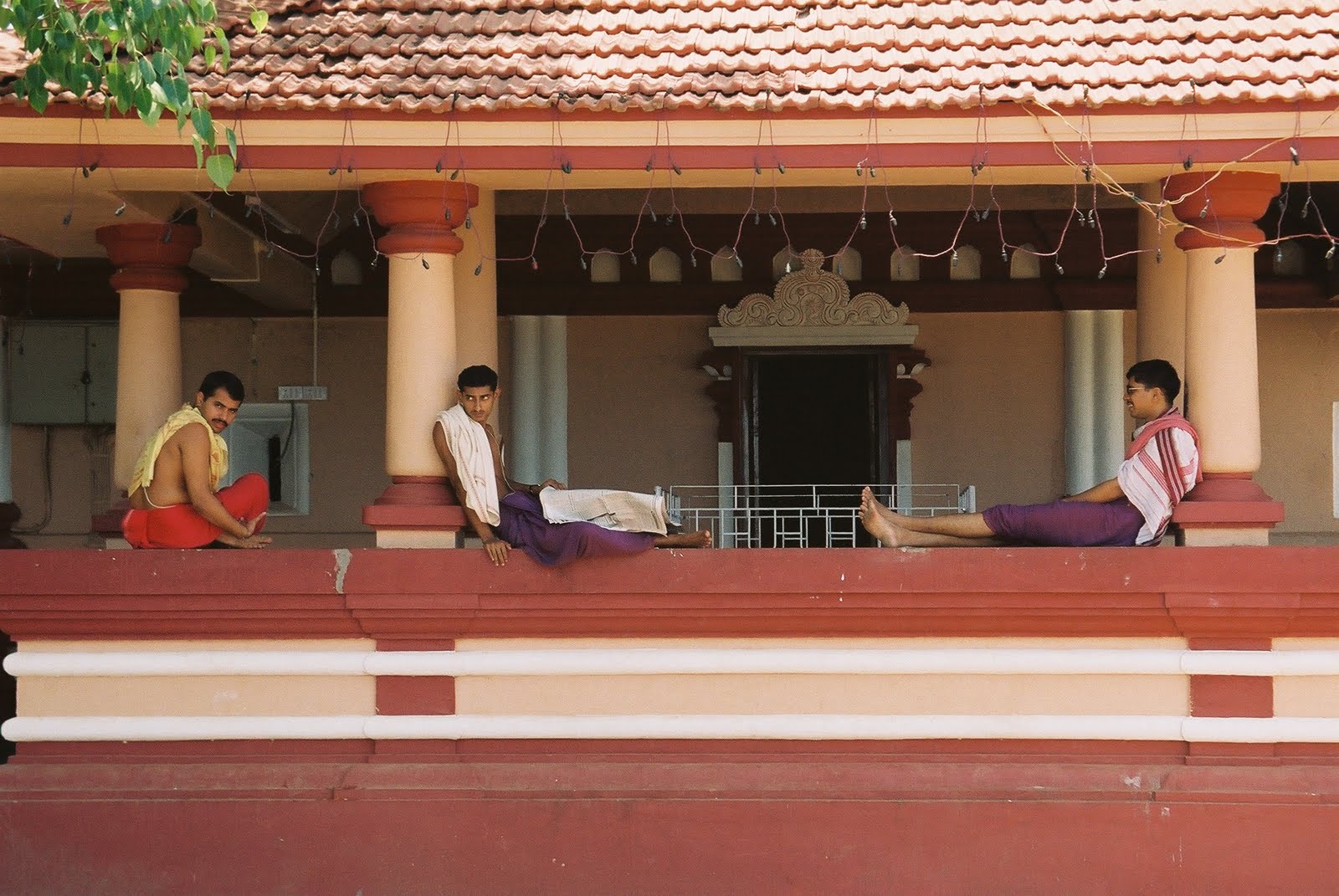
Shri Chandranath temple in Goa. India

Today I’ve decided to go back to India. Maybe I’ve a good reason for that, or perhaps I’m just inspired for my next trip, that will happen in a few days, also in Asia. After a strong climbing up the huge granite steps you reach the Shri Chandranath temple in Goa. The Shri Chandranath temple is situated on the top of 350 meters high hill of Chandranath, in Paroda, Quepem. The atmosphere is great because you are fare from everything. The chief deity of the Shri Chandranath temple is Lord Chandreshwar. Lord Chandreshwar was the titular deity of Bhoja kings who ruled the South of Goa, till the middle of 8th century, before the Christians took over. The Bhojas had named their capital Chandrapur after the deity. The altar is that of Sri Bhutnath. The Shivalinga in the temple is carved out from the rock. This famous Shiva Linga, was supposed to ooze water at the touch of moonlight. The temple is so designed that the Linga receives moonlight on every full moon. Moreover, the Shri Chandranath temple's ancient chariot is well known for its wood carvings. The Shri Chandranath temple commands a panoramic view – from the temple you a nice view of a long ending green valley of Salcete and Quepem Taluka. We arrive in the middle of the afternoon. The place was silent and hot, with a few persons resting and reading the news paper. As I said in previous post, India is a great destination. It can be sometimes hard for our senses but fare from that also a great challenge. Once in you skin, you will love it.